
Six people, two showers, one forty-gallon tank. The math had stopped working years ago; the family in Murphy had just gotten used to scheduling their mornings around it. When the old tank finally started leaving rusty water in the pan, they called with a question we hear weekly: should we just do tankless?
Our answer is always the same: maybe — let's do the math first. Tankless done right is a genuine upgrade. Tankless done by guesswork is how you end up with an expensive unit that gives two showers of lukewarm regret.
The sizing
Tankless units are rated by flow — how many gallons per minute they can heat — and by how far they have to raise the incoming water temperature. We counted the fixtures that realistically run at once in this house (two showers and a kitchen tap, on the bad mornings), and worked against North Texas groundwater, which runs warmer than the national charts assume in summer and a good deal colder in January. The unit that fit wasn't the biggest one on the truck or the one from the big-box flyer — it was the one whose numbers matched this house in this climate.
The part the flyer never mentions: the gas line
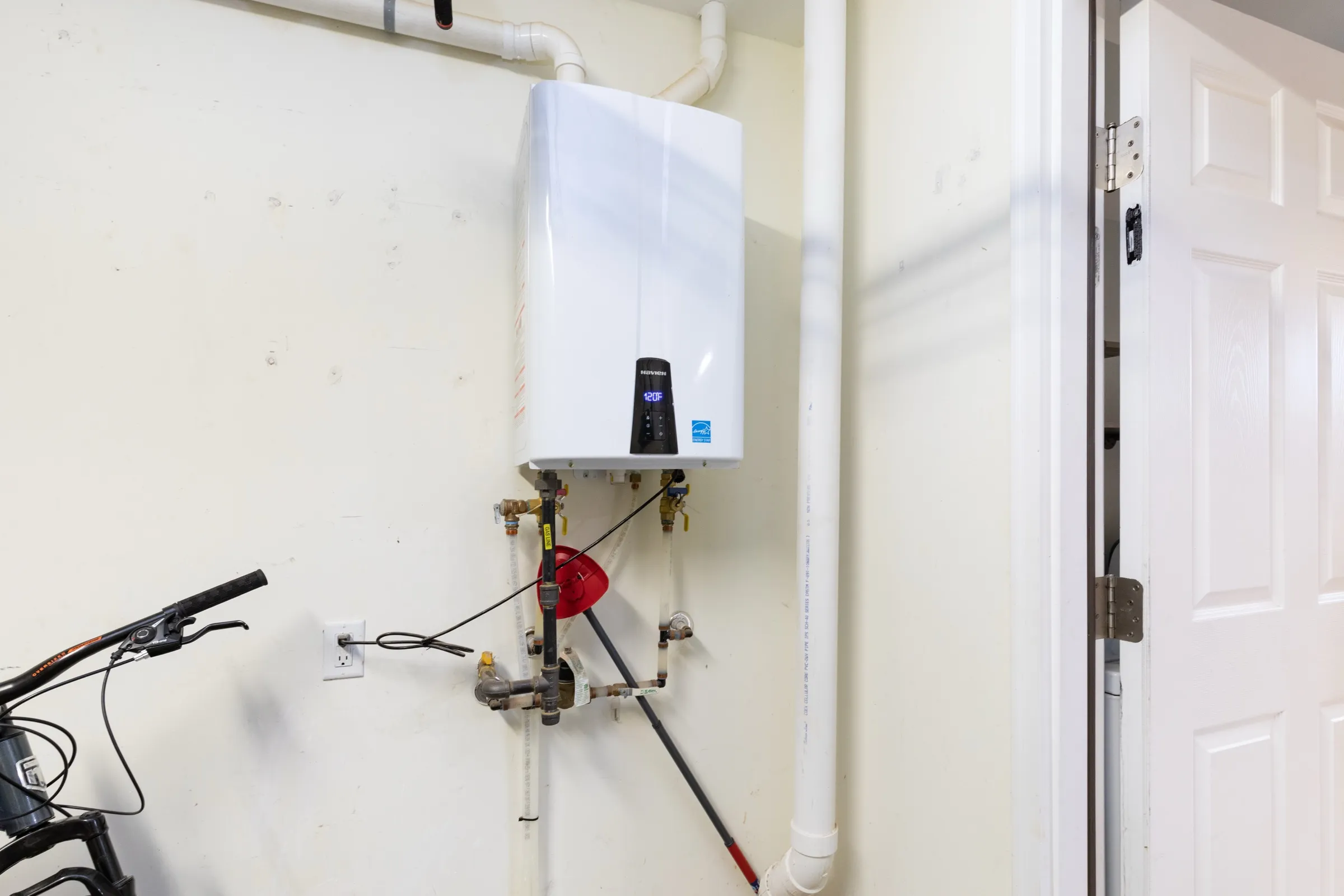
A tankless unit heats water on demand, which means it drinks gas fast while it runs — often more than double what a tank heater draws. The existing gas line to this water heater closet was sized for the old tank, not for that. So the install included upsizing the gas run to feed the new unit properly — pressure-tested before it carried a single BTU, the way all our gas work is. Skipping that step is the single most common reason a "professionally installed" tankless underperforms.
Install day
Old tank drained and hauled out. The new unit wall-mounted in a fraction of the closet, venting run to spec, water and upsized gas connected, everything leak-checked and fired. First test: both showers and the kitchen sink, running together, on purpose — probably the first time anyone in that house had dared. Hot, hot, and hot.
We left them with one piece of homework: an annual flush. North Texas water carries minerals, and a yearly descale is what keeps a tankless unit performing for its full fifteen-to-twenty-year life.
What Murphy homeowners should know
Tankless is worth it when the sizing is honest and the gas supply is real — and it's a disappointment when either is guessed at. If you're getting quotes, ask two questions: what GPM and temperature rise is this sized for, and does my gas line support it? If a bidder can't answer both, keep bidding.
Questions Murphy homeowners ask
Is tankless worth it over a standard tank?
For households that outrun their tank — larger families, back-to-back showers — usually yes: endless hot water, a smaller footprint, and a 15–20 year service life. For light hot-water use, a quality tank can still be the value pick. We'll tell you which house you have.
Does a tankless water heater need a bigger gas line?
Very often, yes. Tankless units draw far more gas while running than tank heaters. We size and, when needed, upsize the line — and pressure-test all gas work before it goes live.
What maintenance does tankless need?
An annual flush to clear mineral scale — especially on North Texas water. It's quick, and it's the difference between a unit that lasts and one that fades at year eight.