
The call came from a foundation company, not the homeowner. That's common in our line of work. They had a repair scheduled on a one-story home in Wylie — piers ready, crew booked — but their contract required one thing first: proof the under-slab plumbing was sound. If a drain line is leaking under a slab, lifting the foundation can turn a small problem into a disaster. So the foundation work stopped until someone could answer a simple question: is anything leaking under this house?
The homeowners had suspicions of their own. A warm spot on the hallway floor. A water bill that had crept up two months running. Nothing dramatic — slab leaks rarely announce themselves.
Finding it: the hydrostatic test
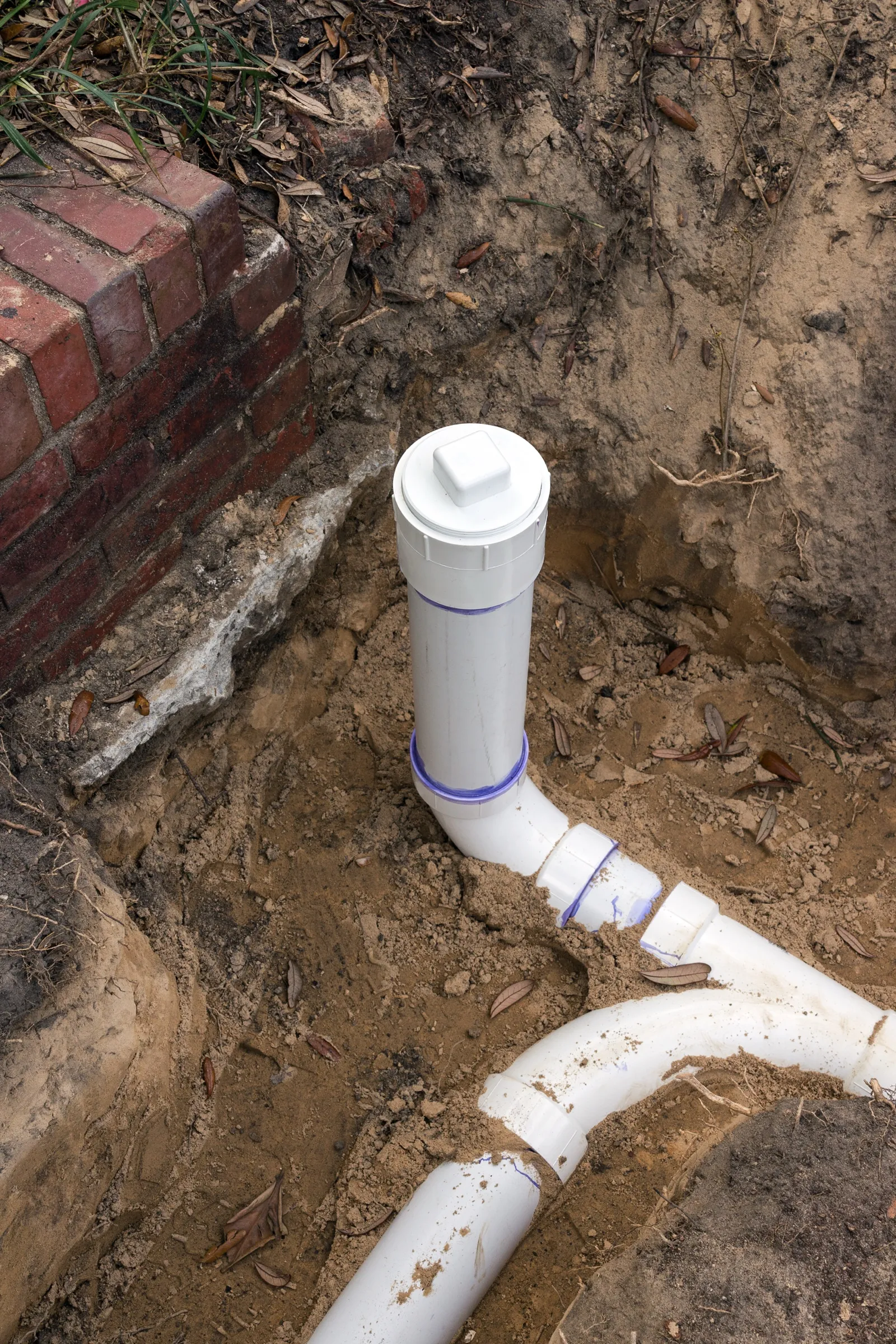
A hydrostatic test is a water-level test, not a pressure test — no pumps, no stress on the pipes. We sealed the system at the home's two-way outdoor cleanout with an inflatable test ball, filled the drain lines with water to slab level, and watched. A sound system holds its level. This one didn't. The level fell slowly and steadily — a leak, somewhere under the slab.
Finding a leak isn't the same as finding the leak. Rather than guess, we isolated the system section by section, testing each run on its own until the dropping level pointed to a single stretch of drain line under the hallway — right where that warm spot had been.
The fix
With the leak located to a few feet instead of a whole house, the repair stayed small: targeted access, the failed section replaced, and then — this is the part that matters — a second hydrostatic test to prove the system held. It did. We documented both tests, start to finish, and sent the report to the homeowner and the foundation company the same day.
The foundation crew kept their schedule. The homeowners got their floor back. And nobody tore up a house to find a leak that a proper test could point to.
What Wylie homeowners should know
Foundation movement and under-slab plumbing are tangled together — movement can break pipes, and leaking pipes can undermine a foundation. If a foundation company is quoting you for repair, a hydrostatic test before the lift protects you twice: it catches leaks while they're still small, and it documents the condition of your plumbing before anyone touches the slab. A two-way outdoor cleanout is required to run the test; if your home doesn't have one, we can install it.
Questions Wylie homeowners ask
What is a hydrostatic test?
A diagnostic that fills your under-slab drain lines with water and monitors the level, usually for about 20 minutes. If the level holds, the lines are sound; if it drops, there's a leak. It's a water-level test — no damaging pressure is involved.
Do I need one before foundation repair?
Most reputable foundation companies require it, and for good reason: lifting a slab over a leaking line can make both problems worse. Testing first protects your home and everyone's warranty.
What are the signs of a slab leak?
Warm spots on floors, unexplained jumps in your water bill, the sound of running water when everything's off, and new cracks in flooring or walls. Any of these is worth a test.